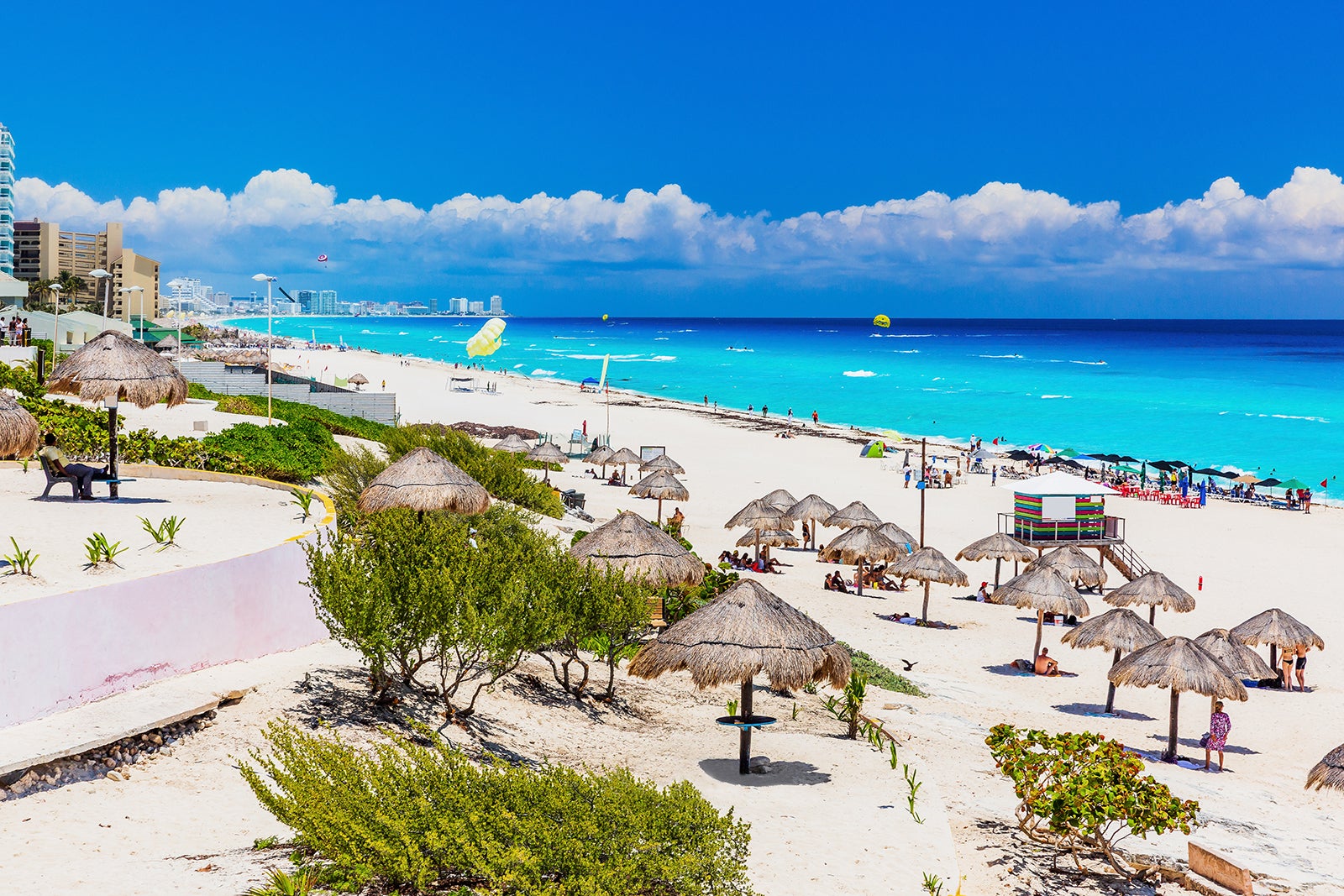
Playa Delfines
Known for its open expanse, this beach provides access to deeper waters where larger schools of fish can often be spotted near the shore.
Swim near the rocky breakwaters to increase visibility.

Cancun's 22-kilometre barrier of white sand faces two different bodies of water, and only one side rewards a mask and snorkel. This best beaches in cancun for snorkeling guide maps which public shorelines sit near living reef, which are swimmable sand flats, and how seasonal water clarity shifts the answer. Everything here is built around free-entry public beach access along Boulevard Kukulcán.
Quick answer
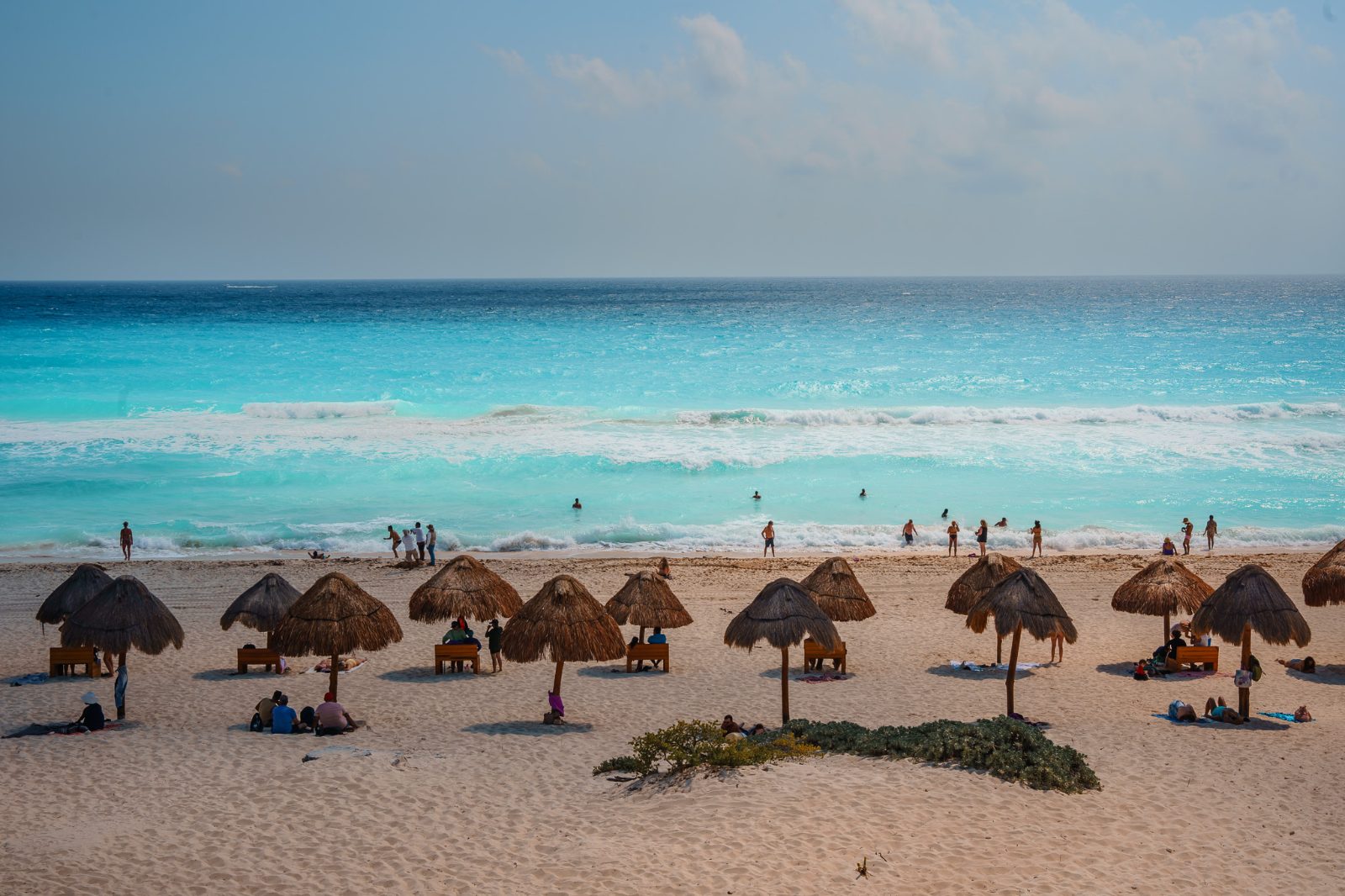
Cancun's public snorkeling beaches cost 0 USD (Free entry) and are open 00:00–23:59 every day, including the stretch at Blvd. Kukulcan km 19.5, Zona Hotelera, 77500 Cancún, Q.R., Mexico. Shore snorkeling works best in the sheltered northern bays, where the seabed stays shallow. The caveat: the Caribbean-facing southern beaches have stronger surf and thinner reef, so visibility there depends entirely on swell.
The Cancun sandbar is geologically young and almost entirely engineered in parts, which explains an odd fact about its waters: the famous Mesoamerican Barrier Reef, the second-largest reef system on earth, does not actually touch the Hotel Zone shoreline. It runs offshore and south toward Puerto Morelos and Isla Mujeres. What the beaches offer instead are patch reefs, rocky outcrops, seagrass meadows and limestone shelves — smaller habitats that still hold sergeant majors, parrotfish, needlefish, the occasional southern stingray and, in the right months, sea turtles grazing the grass beds. That geography creates two distinct zones. The northern arm of the sandbar, from Playa Las Perlas through Playa Linda, Playa Langosta and Playa Tortugas, faces Bahía de Mujeres. The bay is shallow, protected and often glassy, which is why it anchors most short boat departures toward Isla Mujeres and the Punta Nizuc reef. South of the bend at Punta Cancún, the coast turns to face the open Caribbean. Playa Chac Mool, Playa Marlín, Playa Ballenas and Playa Delfines carry longer sand, steeper drop-offs and real surf. They are magnificent for swimming and photographs, less reliable for a mask. Anyone weighing up the best beaches in cancun for snorkeling should start with that single distinction before anything else. Water clarity is the second variable, and it moves with the calendar. Autumn and the tail of hurricane season stir sediment and push sargassum onto the Caribbean-facing sand; late winter through spring generally runs clearer and flatter. Wind direction matters more than temperature. A northerly blow can flatten the bay side and roughen the open coast on the same morning, so a flexible plan beats a fixed one. The practical conclusion is that shore snorkeling in Cancun is a reconnaissance activity, best treated as a free, low-commitment way to read the water before committing to a reef trip. Public access along Boulevard Kukulcán is open and unticketed, so comparing two beaches in one day costs nothing but bus fare. Travellers who want dense coral — the Punta Nizuc gardens, the MUSA underwater sculpture museum, the drift lines off Isla Mujeres — reach those by boat, not by wading. Read the best beaches in cancun for snorkeling as the starting map, then let a guided reef departure handle the depth.
“The reef does not meet the sand in Cancun — the beaches are where you read the water before you go find it.”
The best arrival window is 06:00–09:00, which offers clearer water and calmer seas while allowing visitors to secure free umbrellas before crowds arrive.
—
These hours provide the most consistent underwater visibility and quiet surroundings for snorkeling.
Warm, 28°C to 30°C
These shoulder season months offer high visibility and pleasant water temperatures before the summer heat.
Warm, 27°C to 29°C
Post-hurricane season conditions often result in calm seas and clear water for snorkeling.
Verdict: The concrete best slot is the 06:00–09:00 window during the months of April or October.
Public beach access points in the Cancun Hotel Zone remain open to visitors throughout the entire week. These locations provide continuous access for those planning snorkeling activities.
Access to public beaches in Cancun is provided at no cost, as these areas are federal property. Fees only apply if choosing to use private beach club amenities or services.
Verdict: A typical visitor pays 0 USD for beach access, though costs fluctuate based on optional private club memberships or gear rentals.
The coastline of Cancun offers distinct zones where geological formations and artificial barriers create habitats for marine life. Focus on these identified areas to access the most consistent conditions for observing local aquatic species.
Known for its open expanse, this beach provides access to deeper waters where larger schools of fish can often be spotted near the shore.
Swim near the rocky breakwaters to increase visibility.
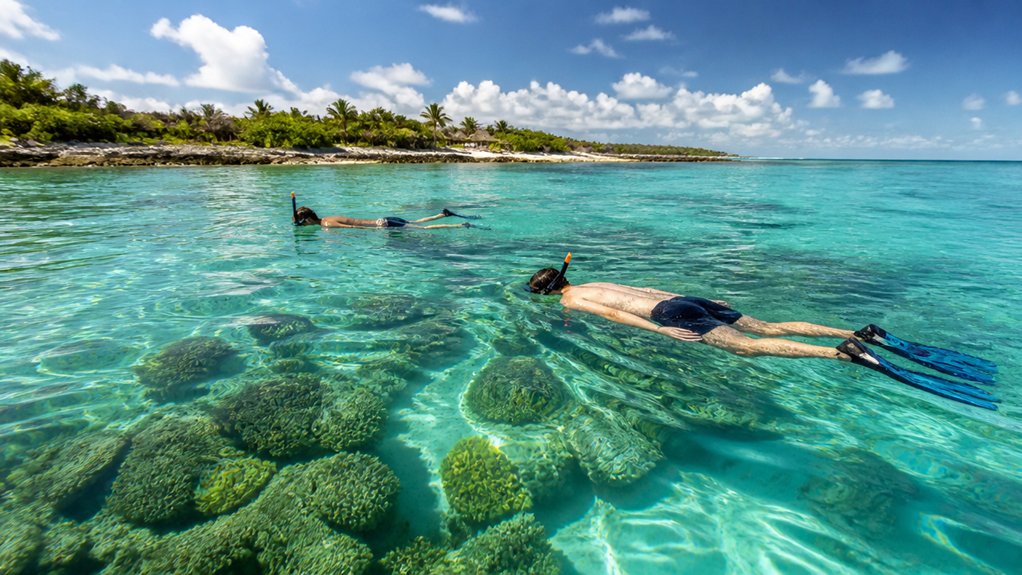
Located at the southern end of the Hotel Zone, this area features a coral barrier that acts as a natural breakwater, protecting calmer snorkeling zones.
Explore the shallow reef section during low tide.
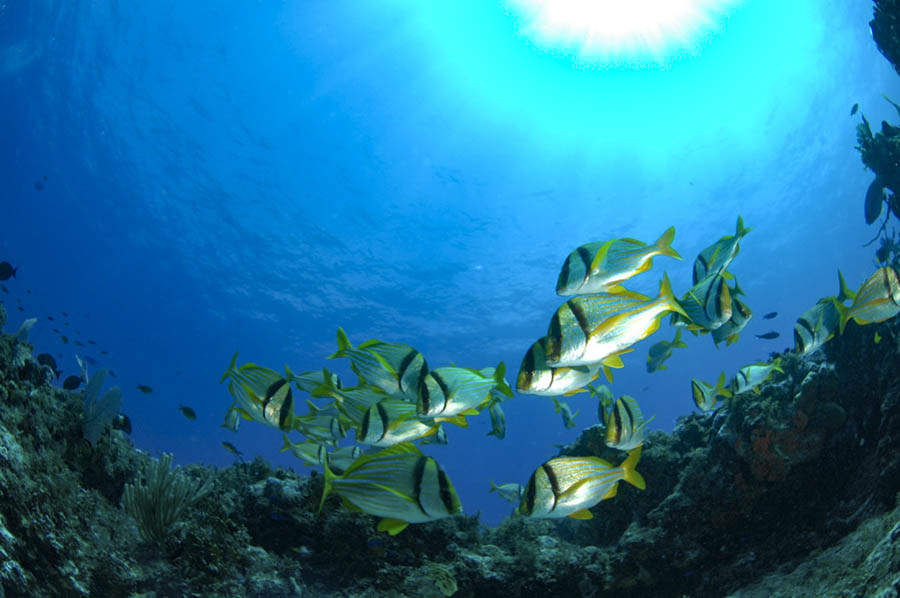
Situated just off the coast, this protected site is part of the Great Mayan Reef system and hosts diverse marine life, including sea turtles and rays.
Use a guided boat service to reach the reef drop-off.
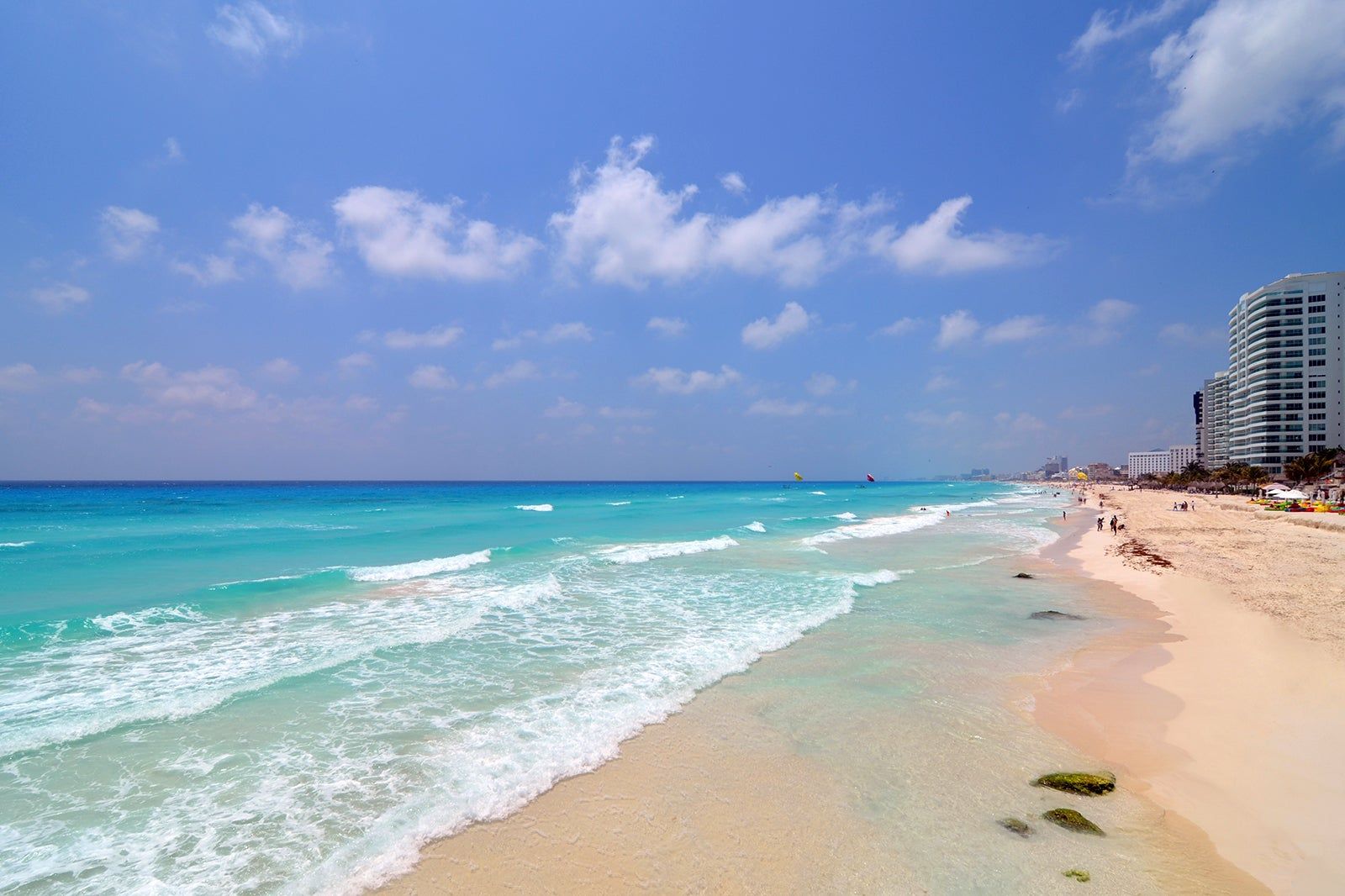
This area provides access to sections of the Mesoamerican Barrier Reef via local boat tours departing from the nearby shore.
Look for coral formations during calm weather days.
Snorkeling off Cancun's hotel zone beaches is self-directed, so your gear and safety prep matter more than any booking step.
Everything you need to know about best beaches in cancun for snorkeling
Many visitors consider the coastline near the Hotel Zone and surrounding reefs among the most rewarding locations. While personal preferences vary, these sites provide excellent access to marine biodiversity and clear Caribbean waters.
The best arrival window is 06:00–09:00 to experience clearer water and calmer seas. Arriving early also helps you secure free umbrellas before the crowds arrive.
Entry to this specific public area is 0 USD. You can enjoy the beach without paying any admission fees.
While you can explore independently, local operators offer specialized snorkeling tours that navigate to deeper reef sections. These tours provide professional guidance and gear for those who prefer a structured experience.
Yes, several vendors near the public beach access points offer mask, snorkel, and fin rentals. It is recommended to check the condition of the equipment before confirming your rental.
The shallow, calm waters during the early morning hours are generally suitable for beginners. Always monitor water conditions and use a flotation device to ensure safety while observing the coral formations and tropical fish.
Best Snorkeling Spots in Cancun
Read more GuideBest Snorkeling Resorts in Cancun
Read more GuideBest Time for Snorkeling in Cancun
Read more GuideIs Cancun Good for Snorkeling?
Read more Tickets & toursBest Snorkeling Tours in Cancun
Read more GuideSnorkeling in the Cancun Hotel Zone
Read more